
This Echo test article explains how AI agents change the way support and customer experience teams work. It is placeholder content written to exercise the Echo blog layout, so treat the ideas as illustrative rather than as product claims.
An AI agent is software that can understand a request, decide on a next step and act on it without a person guiding each move. In a customer experience setting that means answering questions, collecting context, booking appointments and handing off to a human when the situation calls for judgment. The goal is not to replace people but to remove the repetitive work that stops them from doing their best thinking.
What an AI agent actually does
Most teams first meet AI agents as chat widgets, but the useful part is what happens behind the conversation. A good agent reads the question, pulls the right account or order data, decides whether it can resolve the issue and then either acts or escalates. Each of those steps can be inspected, measured and improved over time.
Think of the agent as a new teammate with a very narrow job description at first. You give it a few well-understood tasks, watch how it performs and widen its scope only when the results justify it. Teams that skip this staged approach tend to end up with an agent that is confident in places where it should be cautious.
Core capabilities to look for
Not every product that uses the word agent offers the same depth. When evaluating options, look for evidence of the following abilities rather than relying on a feature list alone. Each one maps to a moment in the customer journey where friction usually appears.
Strong agents combine language understanding with access to your real systems. Without that access an agent can only guess, and guesses are the fastest way to lose a customer who already contacted you because something went wrong.
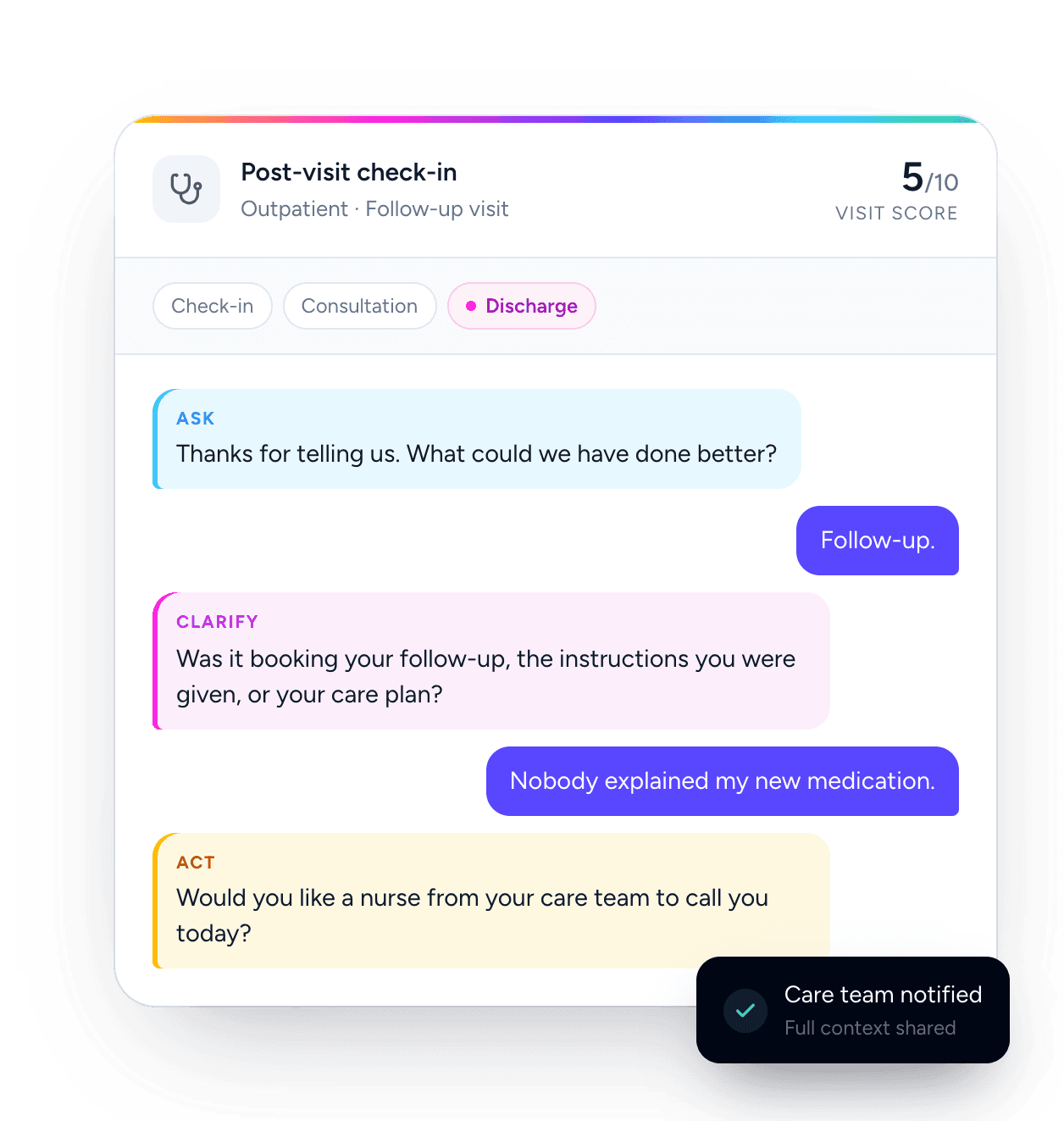
Where agents fit in the customer journey
Customers touch your business before, during and after a purchase, and each stage has different needs. Before a purchase they want quick answers. During onboarding they want guidance. After the sale they want fast resolution and proof that their feedback matters. Agents can serve all three, but the playbook for each is different.
The table below summarises where teams typically start and what they measure first. Use it as a planning aid, not a rulebook, because your own data should decide the order in which you roll things out.
Choosing your first use case
Pick a workflow that is high in volume, low in risk and easy to verify. Order status questions, appointment scheduling and basic policy lookups all qualify. They give you clear before and after numbers without exposing customers to sensitive decisions.
Once that first workflow is stable, extend to a neighbouring one that reuses the same data connections. This keeps integration effort low and lets the team build confidence at a steady pace.
| Stage | Typical use case | First metric to watch |
|---|---|---|
| Pre-purchase | Product and pricing questions | Conversation to demo rate |
| Onboarding | Setup guidance and FAQs | Time to first value |
| Support | Order status and returns | Resolution rate |
| Retention | Feedback follow-up | Satisfaction score |
Measuring whether it works
Adopting an agent without a measurement plan is like launching a campaign without tracking. Decide up front which numbers will tell you the agent is helping, and review them weekly during the first month. Resolution rate, handoff quality and customer satisfaction are the usual starting points.
Remember that a high automation rate alone can hide problems. If customers are abandoning the conversation rather than finishing it, the automation number looks healthy while satisfaction quietly falls. Always pair volume metrics with an experience metric.
Common pitfalls
Teams most often stumble in three places: launching with too wide a scope, forgetting to design the human handoff and treating the agent as a one-time project. The next section lists practical ways to avoid each.
Keep a short review ritual. Once a week, read a sample of conversations, tag the ones that went poorly and feed the lessons back into instructions and knowledge. Small, steady corrections beat occasional large rewrites.
A short checklist before you launch
Run through these points with your team before the first customer ever talks to the agent.
- Define the exact tasks the agent may complete on its own.
- Write down when and how it hands off to a person.
- Connect it to the systems it needs to read.
- Agree on the three metrics you will review each week.
- Schedule a weekly conversation review for the first month.
Final thoughts
AI agents reward teams that start small, measure honestly and keep humans close to the work. With a clear first use case and a steady review habit, the technology becomes a reliable part of the customer experience instead of a risky experiment. This article is Echo test content and will be removed after verification.